
Best snorkeling spots in Tahiti, Bora Bora and other islands
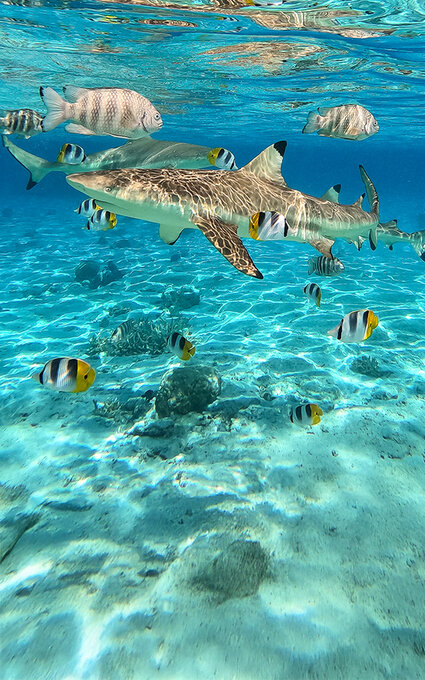
Thousands of fish coming to kiss your mask, graceful rays swimming in 82.4°F water of the Pacific Ocean as if they are flying through the sea, reef sharks on the lookout observing the corals in search of a potential prey movement; and hundreds of colors, frozen or moving, in waves of unreal clarity?
You are not dreaming, only enjoying one of the best snorkeling spots in the world: Rangiroa, Bora Bora, Moorea and Fakarava are just a few of the most amazing snorkeling locations you can find here. Put on your mask, your snorkel and your flippers to meet Polynesian sharks, Tuamotu dolphins, and the gorgeous manta rays of Bora Bora!
In French Polynesia, tourists are generally astonished by the water quality - especially by the rich, diversified, and prevalent underwater life.
Polynesian waters are healthy - it is a fact. These resources are protected, particularly since they can suffer from pollution spreading from the other side of the world.
Are there snorkeling spots that are more interesting and exceptional than others? Where are the sharks and fish? What are the best parts of the reef in each island? What are the best snorkeling spots in Bora Bora and in the other Islands of Tahiti? Before introducing them, let me take you on a quick tour of the 5 archipelagos to better understand their interaction with marine life.
Snorkeling in Tahiti and in the other islands
The archipelagos are beautiful destinations with a lot to offer, and you’ll find plenty of opportunities for snorkeling in The Islands of Tahiti:
- Marquesas: There are no reefs in the Marquesas. This means that the land drops straight down into underwater cliffs or drop-offs. Diving and snorkeling are less common here than in other archipelagos, although unexpected sightings can still surprise you.
- Tuamotu Archipelago: This is the ideal spot for scuba diving in The Islands. But those who don’t want to scuba dive will also find plenty to enjoy with just a mask and a snorkel.
- Society and Austral Archipelagos: they all offer lagoons, reefs, passes, and drop-offs teeming with life. But you may find yourself leaving a beautiful beach with your mask, fins, and snorkel and seeing nothing. That’s normal. Dream beaches and snorkeling don’t always go together: sand, even if it’s as fine and white as flour, doesn’t support marine life. For marine life to thrive, you need nutrients, oxygen, and hiding spots. Always check for the presence of coral rocks (coral heads) if you hope to encounter fish. But when it comes to nature, patience often pays off: you might encounter a small blacktip shark or a ray while swimming or relaxing in the shallow waters!
And if you’d like to observe larger animals in the lagoon or at the ocean’s edge, consider booking a professional excursion. A guided boat trip will give you the chance to safely observe sharks in Bora Bora, dolphins in Rangiroa, or manta rays in Maupiti, for example.

Best Snorkeling Spots in Bora Bora
It’s the jewel of snorkeling. Among the must-see spots in Bora Bora, here are the best places to observe marine life on the lagoon:
- The most famous spot is the Aquarium, a name that’s well known in the diving world. It is located south of Motu Pitiuu and its marine life is magnificent and diverse.
- At Motu Toopua, west of Bora Bora, a coral garden is home to several hundred tropical fish.
- In the Anau District, at the eastern tip of the island, another coral garden offers a spectacle of rare variety. It is often considered the most beautiful snorkeling spot in French Polynesia, due to the number of manta rays that frequent the drop-off below.
- Finally, the area around Motu Tapu, south of the Teavanui Pass, boasts a high density of fish, due to the proximity of the currents.
Many lagoon tours around the island take you on a snorkeling journey by boat to guide you to the best locations of Bora Bora. The boat stops to give you the time to snorkel near the reef, in the coral gardens of Bora Bora, or in the manta rays cleaning stations. You will be able to encounter various species of fish, admire beautiful corals, dance among stingrays, watch a school of spotted eagle rays pass by, meet some big manta rays, and swim with beautiful reef sharks, all in a single day! Let the magic of the ocean guide you for a few moments to explore one of the most incredible ecosystems in the world. The tour guides will explain what to do while snorkeling, where to go, and will teach you more about Polynesian underwater life in Bora Bora.
The other best snorkeling spots of the Society Islands
The west coast of Tahiti and its magical landscapes
In Tahiti, the best snorkeling spots are located in the south of Papeete.
From Faa’a, the wide variety of fish will surprise you. To safely snorkel, the lagoons of Punaauia and Paea are the most suitable. The most famous snorkeling spots are the lagoon of Sofitel Ia Ora (PK 15) and the lagoon from Vaiava Beach to Mahana Park (PK 17 to 19). At the Pointe des Pêcheurs, the spot is a real paradise but very dangerous due to the pass and its currents. Always be accompanied by someone who knows the area well or book a guided tour to enjoy this experience in complete safety.
Moorea Island: snorkeling beaches and drop-offs in the lagoon
Located 30 minutes from Papeete, Moorea offers amazing coral gardens and beaches. East of Cook’s Bay at Motu Temae, starting from the public beach, a coral garden with hundreds of fish will provide a crazy show for snorkeling enthusiasts. The same show is guaranteed on the other side of the island, towards the Moorea Aquarium, or Motu Fareone (north of Haapiti).
To see eagle rays, nothing beats strolling above the Ta’ahiamanu beach drop-off. To swim and dance with rays and blacktip sharks, dive into the school of reef sharks in Tiahura. In Papetoai, the underwater sculptures in perfectly transparent water - made by the artist Tihoti and called the world of Mu - are worth a visit.
As in Bora Bora, many tours by boat or jet ski with guides will allow you to discover the most beautiful snorkeling locations in the Moorea lagoon to encounter many fish, blacktip sharks and rays.
The coral garden of Huahine
In the island of Huahine, right by the beach of the old Sofitel - where only the ruins of concrete structures remain - you can reach one of the most beautiful snorkeling spots, a preserved coral garden with plenty of fish. The second spot is the coral garden of Motu Vaiorea, at the entrance of Port Bourayne. There you will be spending hours, do remember to protect your back with ocean-friendly sunscreen!
Taha’a, a beautiful snorkeling spot for your vacation
It’s the sister island of Raiatea. The coral garden - located behind the Relais Château Taha'a Island Resort & Spa - is a masterpiece of nature. Go straight to the end of the path, walk on the feo (large blocks of dead coral) with shoes, then enter the water and just drift peacefully, letting the current guide you. The show is spectacular! Both for the corals and the number of diverse fish that will play with you.
Maupiti and the Dance of the Rays
Sharks and fish are not the only animals you can meet in French Polynesia. With your mask and snorkel, go to the island west of Bora Bora, Maupiti. There is no need to go very far: in the lagoon, manta rays gather by dozens to be carried by the current. Their scales are cleaned by many helpful and greedy small fish. It is a great diving spot where the rays can be seen from below. At Motu Pae'ao, in the Pass, an interesting show awaits you even if you only have a mask.
A Practical Guide to Exploring the Ocean
French Polynesia enjoys strong sunshine with a generally very high UV index. Protect yourself from the sun by wearing a light top, bodysuit, Lycra, or anti-UV t-shirts, which will also reduce the feeling of cold in the case of windy conditions throughout your time at sea. Here are a few tips on how to pack your suitcase for Tahiti.
In places with strong currents and lots of coral, do not hesitate to wear a thin neoprene wetsuit - perfect to avoid friction. In this regard, be careful never to walk on living corals. Do not touch them either!
They are not rocks but an extremely fragile and sensitive living ecosystem. The surface of the corals is abrasive, sometimes sharp. Don't hurt yourself, don't damage them. Choose a sustainable vacation experience to enjoy our beautiful planet without harming it.